Companies Are Turning Their Own Staff Into Creators. Somebody Has to Teach Them.
Forty percent of consumers now find products through employee content. Almost nobody inside those companies knows how to get a nervous employee on camera.
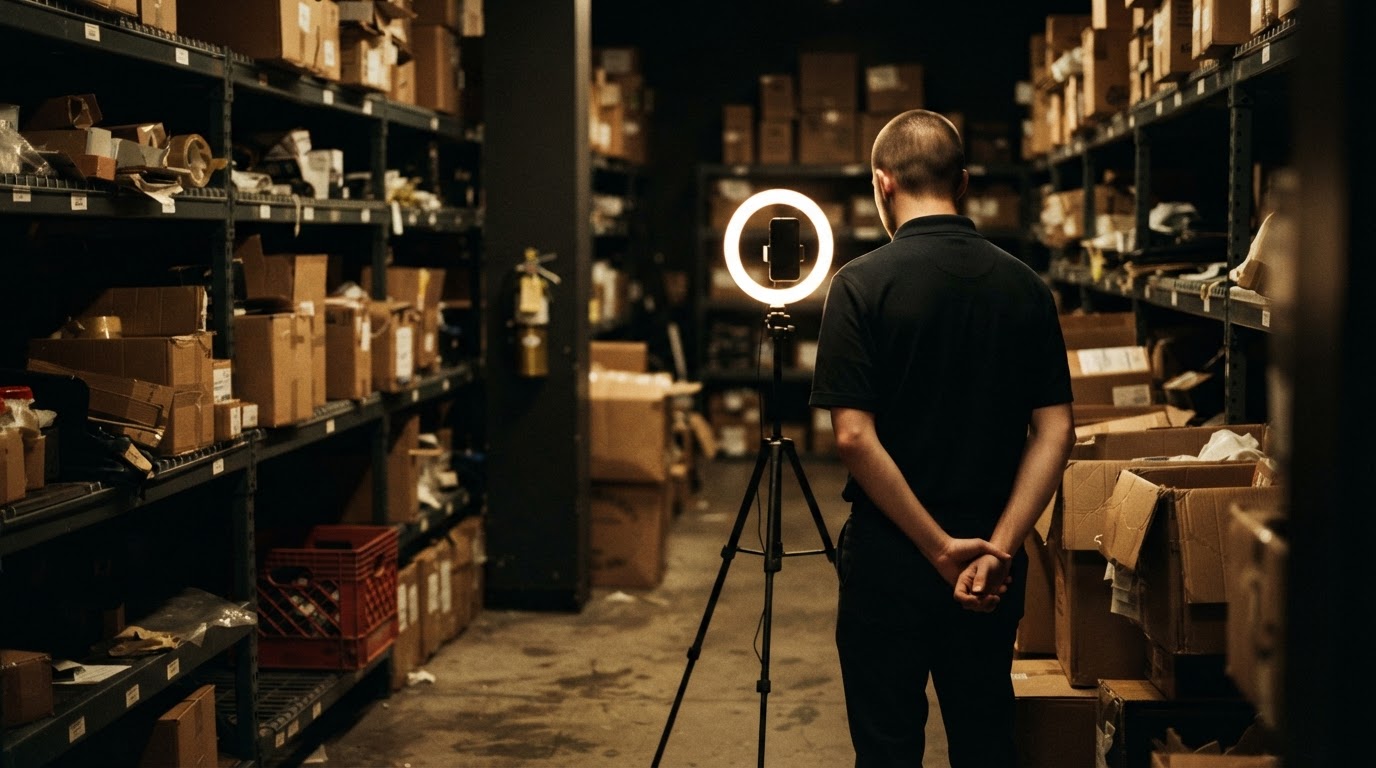
A stockroom manager holding a phone at arm's length is now a marketing channel. Nobody has trained him.
Sprout Social's 2026 Influencer Marketing Report found 40% of consumers discover new products or services through employee-generated content monthly, and that figure climbs to 62% among Gen Z. Digiday flagged the number heading into Q4, noting that kind of trustworthiness can't be replicated by non-employees.
Read that as a media story if you like. It's also a training budget forming in real time.
The part the brands haven't solved
The programs are already being built, and they're being built awkwardly. Gap Inc. is inviting employees to apply into an existing creator program spanning Old Navy, Gap, Athleta and Banana Republic, rather than building something bespoke for staff, while Starbucks is building new programs from scratch — a slower, costlier route. These programs need their own measurement tools, close oversight, dedicated strategy and real rewards.
Then there's the paperwork. Keith Bendes, chief strategy officer at Linqia, described an exec who had just built a program from the ground up and had to work out how employees log hours, whether content gets made on the clock and in-store, whether customers' faces and brand logos can appear, and how it all clears legal. "There's just so much that you need to design that doesn't really come into play when they're not employees," Bendes said.
Notice what isn't on that list. Nobody has solved the part where a 44-year-old district manager with no interest in TikTok has to look like a human being on video, twice a week, forever.
What they're actually buying
Not personal branding. Nobody in a corporate comms department wants to hear that phrase attached to a hundred hourly employees.
They're buying three things: on-camera nerve, brand-safe judgment, and a habit that survives past week three.
The nerve part is the real product. The fear isn't the internet. It's the district manager watching. It's the colleague who'll screenshot it. That is ordinary confidence work, delivered in a conference room instead of a coaching call.
The demand signal underneath is strong: 46% say they'd rather hear from the frontline than from the marketing team or the C-suite. And there's money attached — 61% of consumers believe companies should compensate employees extra for their social promotion efforts. Programs with compensation lines have program budgets.
Which of your skills already sells here
Executive presence coaches: identical muscle, different lens. Media training, rebadged for a phone.
Confidence and mindset coaches: the blocker is social exposure among peers, which is your home territory.
Sales coaches: an employee explaining a product on video is doing a demo. You already teach that.
Sell it as cohorts, not one-to-one. A twelve-person workshop plus follow-up office hours is the shape that fits how these programs are staffed.
And pitch internal comms, employer brand or the social team — not the CMO. The CMO buys creators. The people below her have to make the employees show up.
Amazon launched "FC Ambassadors" in 2018, putting warehouse employees on Twitter to talk up life inside its fulfillment centers. The idea isn't new. What's new is that the audience now says it prefers them.
Sources
Editor’s note: A corporate line item that barely existed 18 months ago, and most coaches already own the skill it needs.
Keep reading
He Spent Years Refusing to Put Long Video on Instagram. On Monday, Adam Mosseri Opened a 90-Minute Slot.
Instagram's new 'Features' format lets clips link straight into full episodes. For coaches with a podcast, that's the leak in the funnel finally getting plugged — maybe.
OpenAI Can Rewrite Your Ad and Change Where It Sends People. This Week That Becomes the Default.
ChatGPT Ads switches on automatic rewrites, translations and destination changes in days. Coaches running cold traffic have until Thursday to decide.

ChatGPT Sells Ads in 63 Countries Now. The One Moment Coaches Want Is the One It Won't Sell.
Sponsored placements are live, self-serve and cheap to test. But OpenAI blocks ads from exactly the conversations most coaches built their businesses around.
One in Five Marketers Now Has a B2B Creator Budget. An Agency Just Bought a Whole Company to Reach It.
A multimillion-dollar acquisition and a new LinkedIn marketplace point at a second income line for coaches who already post credibly to business audiences.