There Are Three Completely Different Products Called "AI Coaching." Only One of Them Is Coming for Your Clients.
A comparison published this month splits the category by price and buyer, and the middle tier is the one that overlaps with what you actually sell.
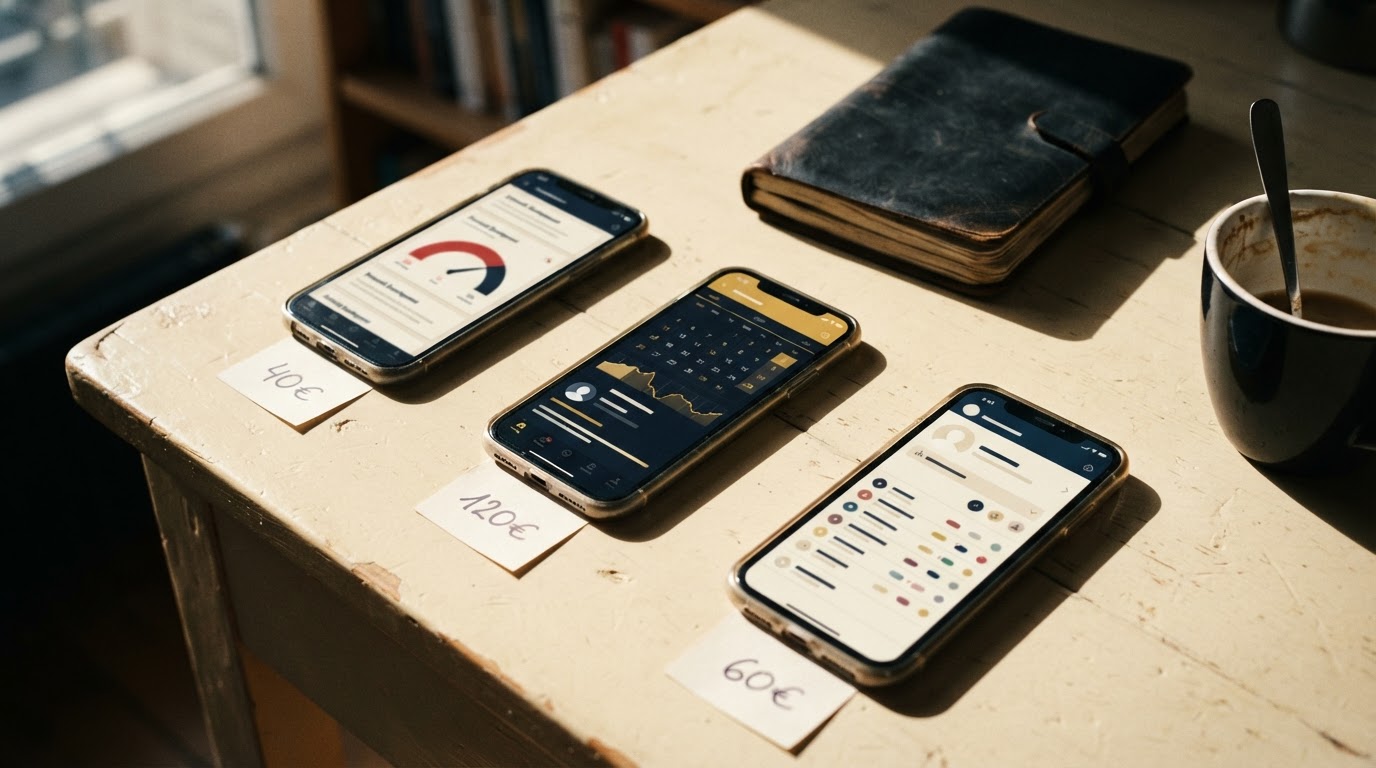
The phrase "AI coaching" is doing three jobs at once, and coaches keep panicking about all three as if they were one competitor.
A comparison published this month sorts them cleanly. It maps buyers to categories: coaching paid for by an employer goes to a workplace platform like BetterUp or CoachHub; setting goals, rehearsing conversations and staying accountable goes to a personal coaching app like Rocky.ai; reflecting daily and noticing patterns goes to a journaling app with AI prompts like Reflectly; managing stress or anxiety with structured exercises goes to a wellbeing companion like Wysa or Pocketcoach.
Four rows, three real products. And they have almost nothing to do with each other commercially.
The enterprise tier doesn't price against you
BetterUp and CoachHub don't publish prices for individuals or companies. Both sell to organisations through demos, and CoachHub describes 3,500+ coaches in 90+ countries alongside its AI coach.
Read that number again. The largest "AI coaching" platform in the category is also one of the largest employers of human coaches in the world. That tier isn't replacing coaches. It's a procurement channel with an AI layer bolted to the front, and the buyer is an HR director with a headcount problem, not your client.
The reflection tier is a different job
Reflectly is a journaling app, with Premium listed on the App Store at $9.99 monthly or $59.99 annually, and its AI feature is personalised questions drawn from your entries.
That is a mirror, not a coach. It is also the tier most coaches are mentally comparing themselves to when they say AI is coming for the industry, because it's the one that sounds most like a session. It isn't. Wysa and Pocketcoach sit nearer to mental health, and the guide's own framing is to use them as self-help support and see a licensed professional for diagnosis, crisis or persistent symptoms.
The middle tier is the one to watch
Rocky.ai starts at $9.99 per month for individual goals. That's the accountability tier, and it sells the exact thing most one-to-one coaches quietly deliver between sessions: a scheduled nudge, a check-in, a short structured conversation about whether you did the thing you said you'd do.
The fitness market already ran this experiment with real numbers. Software-only AI plans cost $70 to $350 a year, and human coaching costs about $200 a month. Future ($199/mo) and Caliber sell real human coaches, and those paid tiers put a human behind the app while Fitbod, Freeletics and JuggernautAI adapt by algorithm.
So the human product survived at roughly twenty times the price of the software product. What it survived on was not programming. Future and Caliber's differentiator is the human coach behind the app, which in practice means accountability someone can't silently ignore.
The intake question
Here's the usable part. The sort is behavioural, not technological.
A client who says I know exactly what I should be doing and I'm not doing it is describing an accountability gap. A client who says I don't know what I actually want is describing a reflection gap. Those two sentences point at completely different products, and one of them is now available for ten dollars a month.
Another comparison of six AI coaching tools breaks the loop into four steps: planning, meaning defining a goal, constraint or decision; reflection, meaning examining assumptions, behaviour and obstacles; action, meaning agreeing on a specific step outside the app; and accountability, meaning returning to review the evidence and adjust the plan. Its verdict: the right choice depends on the behavioural gap, and you should choose the tool that turns a defined goal into action, evidence and review, not the one that produces the most convincing conversation.
That last clause is the whole warning. Software is extremely good at producing a convincing conversation. A 2025 study published in npj Digital Medicine found large language models frequently prioritize agreement over accuracy, a tendency researchers call sycophancy.
A $9.99 app will agree with your client. It will not tell them the business they're describing is a hobby, or that the promotion they want is one they've already decided against. The guide's own line is that an AI coach supports habits and practice, and does not replace a therapist or a human coach for high-stakes decisions.
Price accordingly. If your package is mostly weekly check-ins, you are selling into the ten-dollar tier whether or not you know it.
Sources
- AI Coaching Apps 2026: Compared by Goal and Setting — Arahi
- Best AI Personal Trainer Apps in 2026—and When a Human Coach Is Better — SensAI
- Best AI Coaching Apps for Personal Development: Planning, Reflection and Accountability — IntelligentHQ
- Best AI Life Coach Apps in 2026: 7 Tools Tested & Compared — ixcoach
Editor’s note: Coaches hear 'AI is coming for you' every day. This is the first piece that names which AI, at what price, and which tier actually overlaps with their offer.
Keep reading
EZRA Has 4,500 Human Coaches. An AI Now Decides When One of Them Gets Looped In.
The Adecco Group's coaching arm just made the machine the front door and the credentialed human the escalation. Coaches should read the fine print.

The "AI Version of You" in Your Funnel Stops Answering on December 11
OpenAI is retiring Custom GPTs. If you ever told an audience "try my free GPT," that link has a shutdown date.

Career Coaching for the Laid-Off Was a $3,000 Executive Perk. The New Pitch Is $20 a Month.
AI vendors are repricing outplacement from a consulting fee to a software subscription, and the executive coaching package is now the benchmark being undercut.
He Just Raised $5 Million on the Opposite of the AI Pitch: "We Want to Empower Humans"
A Minneapolis founder told investors AI should make salespeople more human, not redundant. Siemens, ServiceTitan and Canva are already buying it.